Reserve Studies
Useful Life vs. Remaining Useful Life: The Numbers Behind Your Study
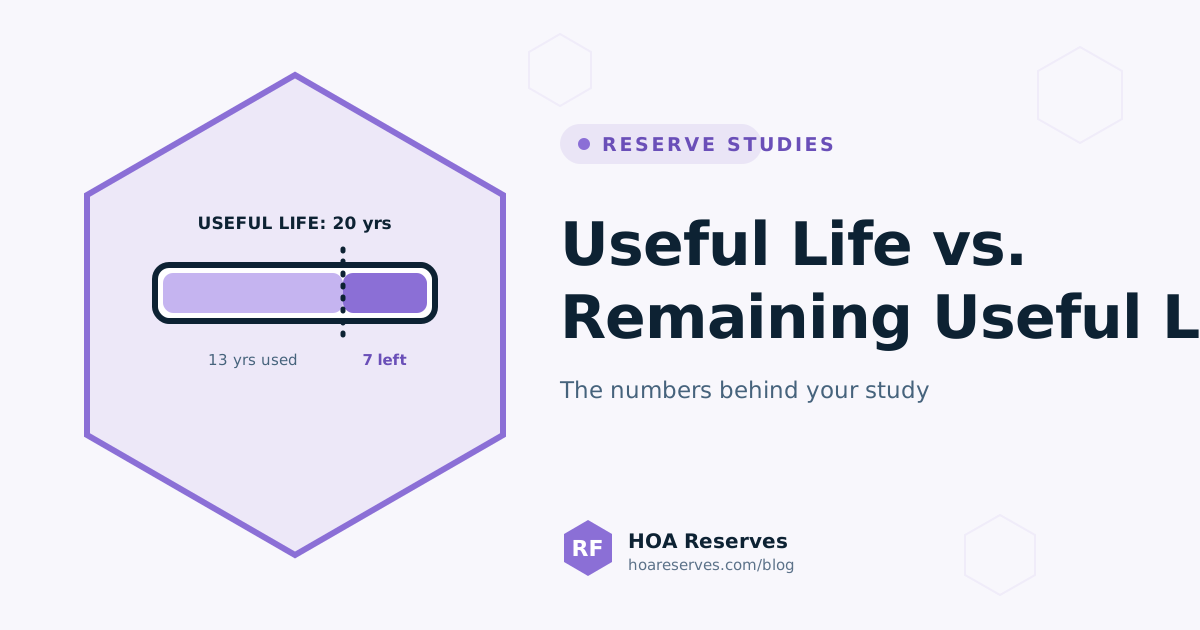
Two small phrases drive nearly every number in a reserve study: useful life and remaining useful life. They sound similar, they're easy to confuse, and getting them wrong is one of the most common ways a reserve study quietly underfunds a community. Here's exactly what each means and why the distinction matters.
The Two Definitions
Useful Life (UL) — the total expected lifespan of a component when new. How long a roof, a pump, or an asphalt lot is expected to last from installation to replacement. A flat roof might have a useful life of 20 years; an HVAC unit, 15.
Remaining Useful Life (RUL) — how many years are left right now, given the component's current age and condition. A 20-year roof that's 13 years old has a remaining useful life of about 7 years — assuming it's aging normally.
The simple relationship: Remaining Useful Life = Useful Life − age (adjusted for condition).
Why the Distinction Drives Everything
Remaining useful life is the number that actually sets your funding timeline. The contribution math is built on it:
(Replacement cost − amount already saved) ÷ remaining useful life = annual contribution
The shorter the remaining life, the higher the annual contribution needed to be ready in time. Get the RUL wrong and the contribution is wrong — and the error compounds every year until the component comes due.
Useful life sets the baseline expectation; remaining useful life is what you fund against today. A reserve study that only used UL — ignoring how much life each component has already consumed — would have no idea how urgently to save. The whole point of the study's physical analysis is establishing an accurate RUL for each component.
"Adjusted for Condition" Is the Hard Part
Notice the phrase "adjusted for condition" in the formula above. RUL isn't just arithmetic — it's where professional judgment earns its fee. A roof's remaining life isn't simply its useful life minus its age, because:
- Maintenance changes it. A well-maintained roof may exceed its rated life; a neglected one fails early.
- Climate changes it. The same component lasts longer in mild climates than in harsh-sun or coastal environments.
- Condition changes it. Visible deterioration can mean a component rated for 8 more years actually has 4.
This is why a site-visit reserve study matters and why a credentialed reserve specialist is worth the fee — estimating RUL accurately requires inspecting the actual component, not just subtracting age from a national table.
The Underfunding Trap
Here's how optimistic life estimates quietly sink a funding plan: a study assumes a roof has 12 years of remaining life when it really has 7. The contribution is calculated to fund replacement in 12 years — too slow. When the roof fails at year 7, the fund is short, and the community faces a special assessment. The math was done correctly; the input (RUL) was wrong.
Optimistic remaining-life estimates are one of the most common reserve study errors, and they always underfund. This is why studies need regular updates — RUL changes every year, faster than simple aging if conditions deteriorate, and a stale study carries stale remaining-life numbers.
What Boards Should Watch
- Make sure your study reports RUL, not just UL — remaining life is what drives funding
- Question optimistic estimates — if every component is assumed to last its full rated life, the study may underfund
- Update after major events — a harsh winter, a storm, or deferred maintenance can shorten RUL
- Feed maintenance back in — work that extends a component's life should update its RUL (maintenance and reserves)
- Get a site visit periodically — RUL can't be assessed accurately from a desk
The Bottom Line
Useful life is a component's total expected lifespan; remaining useful life is how much is left today, adjusted for real condition. RUL is the number that drives your funding contribution, it requires professional judgment rather than simple subtraction, and optimistic RUL estimates are a leading cause of underfunding. Keep your remaining-life numbers honest and current, and the funding plan built on them holds. For the full study anatomy, see The Complete Guide to HOA Reserve Studies; for how RUL feeds the contribution, How to Calculate Reserve Fund Contributions.