Reserve Studies
Level 1, 2, and 3 Reserve Studies: Which One Do You Need?
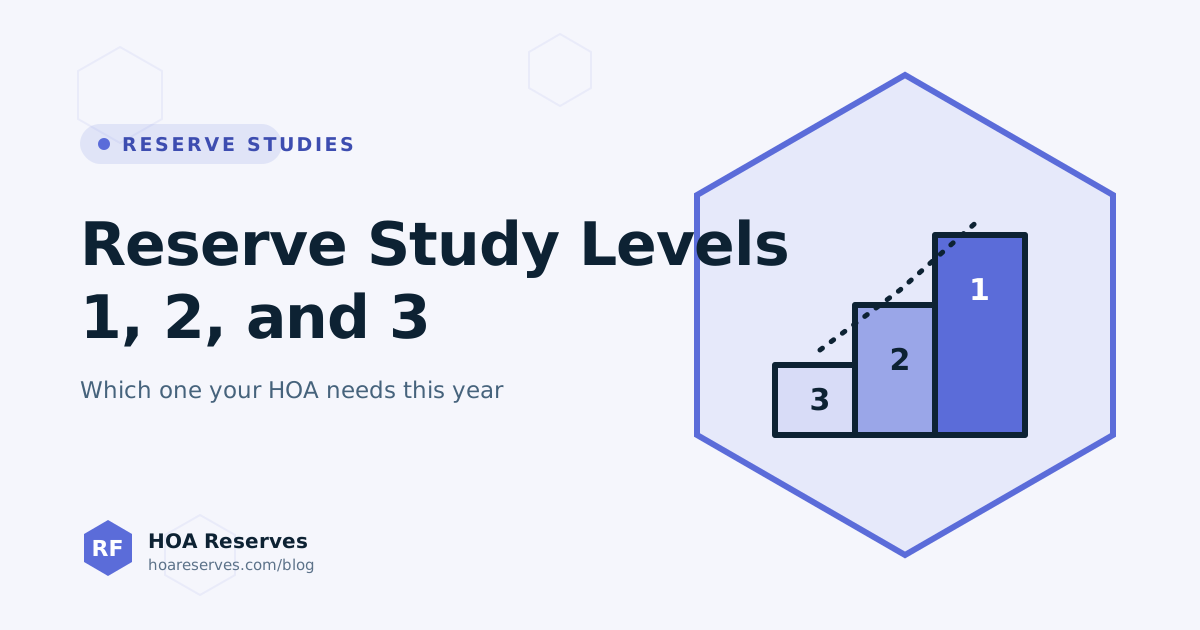
Not every reserve study is the same depth of work — or the same price. The industry recognizes three standard levels of service, and choosing the right one for a given year is how associations keep their study current without overpaying. Here's what each level involves and when to use it.
The Three Levels
Level 1 — Full Reserve Study (with site inspection). The complete article: an analyst builds the component inventory from scratch, physically inspects the property, measures and assesses each component, and constructs the full financial analysis and funding plan. This is the most thorough and most expensive level.
Level 2 — Update With Site Visit. Starts from an existing study. The analyst returns to the property, physically re-inspects components, verifies conditions and quantities, and updates the financial analysis. Less work than a full study because the inventory already exists, but it still includes the crucial on-site reassessment.
Level 3 — Update Without Site Visit. A financial refresh of an existing study with no new inspection. The analyst updates costs, interest, the current balance, and the funding projection using the existing component data. The cheapest level — and the one most dependent on the underlying inventory still being accurate.
When to Use Each
The levels are designed to rotate, not compete:
- Get a Level 1 full study when you've never had one, when your existing study is badly outdated, after major changes to the property, or when the existing component inventory can no longer be trusted. New associations start here.
- Use a Level 2 update with site visit periodically to keep eyes on the actual condition of components — typically as the on-site checkpoint in your multi-year cycle.
- Use a Level 3 update without site visit in the interim years, when components are aging predictably and you mainly need the numbers refreshed for the budget.
A common, sound rotation: a full or with-site-visit study every 3–5 years, with no-site-visit updates in the years between. (Full guidance on update frequency.) Some state laws specify which level satisfies the requirement and how often — California, for instance, requires a study based on diligent visual inspection at least every three years, which speaks to the site-visit levels. (State-by-state rules.)
Why the Site Visit Matters
The temptation is always to default to Level 3 forever — it's cheapest. The risk is that component conditions drift from what's on paper. A roof assumed to have eight years left might be failing now; a recently replaced component might be carrying outdated cost data. Without periodic eyes on the property, a study can quietly diverge from reality, and the funding plan with it. The site visit is what keeps the component inventory honest, which keeps percent funded meaningful.
How Level Affects Cost
Level maps directly to price: a no-site-visit update is the cheapest option, a with-site-visit update sits in the middle, and a full study is the most expensive. Rotating levels is precisely how associations keep lifetime study costs down while staying current — paying full-study prices every year would be wasteful, but running on no-site-visit updates forever risks an inaccurate plan. (Full pricing breakdown.)
Choosing This Year's Level
Ask three questions:
- Has the property changed materially, or is the existing inventory questionable? → Full study
- Has it been a few years since anyone physically assessed the components? → Update with site visit
- Are components aging predictably and you just need current numbers for the budget? → Update without site visit
Match the level to the year's actual need, rotate the site-visit levels in on schedule, and your study stays both accurate and affordable. For the complete picture of what a study contains and how to use it, see The Complete Guide to HOA Reserve Studies.