Reserve Studies
Reserve Study Standards: The Three Levels Explained
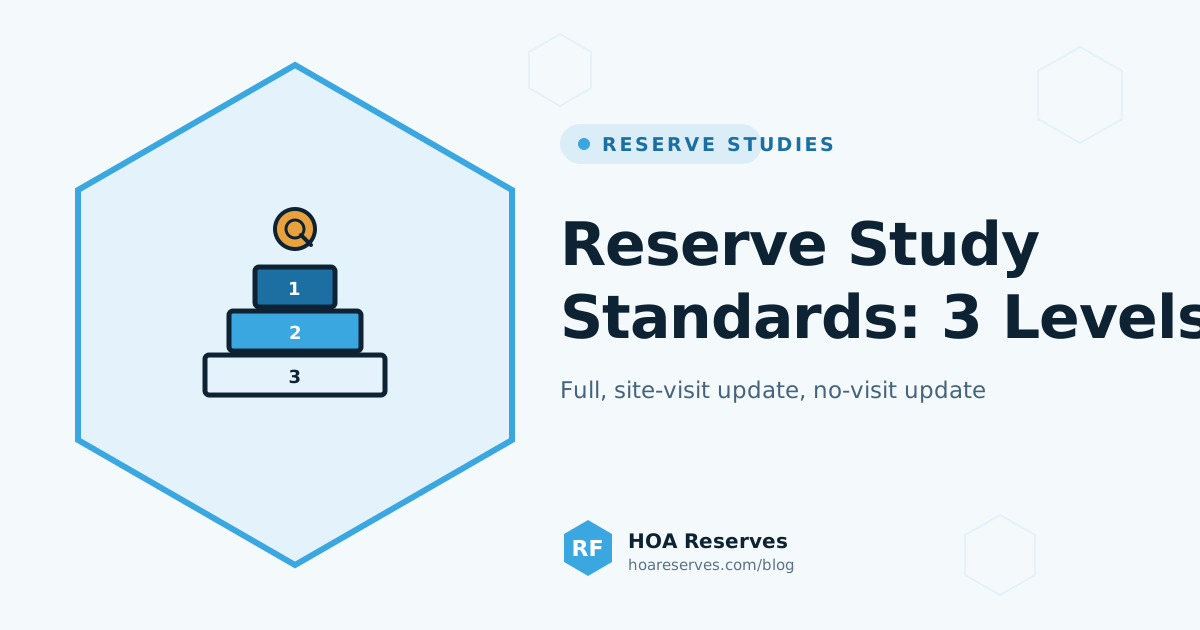
Not all reserve studies are the same — there are three standard levels, differing in depth, cost, and how often each is appropriate. Understanding the levels helps boards get the right study at the right time, neither overpaying for unnecessary depth nor relying on a too-shallow study. Here's what the three levels mean and when to use each.
The Three Standard Levels
The reserve study profession (notably through the Community Associations Institute, CAI) recognizes three standard levels of reserve study, distinguished mainly by whether and how the components are physically inspected and inventoried:
Level 1 — Full Reserve Study (with site inspection):
- The reserve analyst conducts a complete on-site inspection
- Builds (or fully rebuilds) the component inventory from scratch — identifying, measuring, and assessing every component
- Establishes component quantities, conditions, useful lives, and costs
- The most thorough and expensive level
Level 2 — Update with Site Visit:
- Builds on an existing component inventory rather than rebuilding it
- Includes an on-site visit to observe conditions and verify the inventory
- Updates conditions, costs, and the funding plan
- Less expensive than a full study, more than a no-visit update
Level 3 — Update without Site Visit:
- Updates the existing study's financials — costs, contributions, the funding plan
- No site visit; relies on the existing inventory and condition data
- The least expensive level; essentially a financial refresh
The progression is from "build it from scratch with a full inspection" (Level 1) to "refresh the numbers from the desk" (Level 3). (What a reserve study is.)
When to Use Each Level
The levels are designed to be used in a cycle, not interchangeably:
- Level 1 (full) — for a community's first study, or periodically (e.g., every several years) to fully reassess; also when major changes have occurred
- Level 2 (with site visit) — for regular updates between full studies, when an on-site check of conditions is valuable
- Level 3 (no site visit) — for the years between deeper studies, to keep costs and the funding plan current against inflation
A common sound pattern: a full study (Level 1) periodically, with site-visit or no-site-visit updates in the intervening years to keep the numbers current. The exact cadence depends on the community and any state requirements. Some states specify the level and frequency required.
Why the Site Visit Matters
The key difference between the levels is the site visit, and it matters because:
- Conditions change — components deteriorate, get repaired, or fail differently than projected; only an on-site look catches this
- Costs drift — but a financial update can handle cost changes without a visit
- The inventory can become stale — without periodic on-site verification, the component inventory drifts from reality
The trade-off: site visits add accuracy but cost more. The level system lets boards balance accuracy against cost over a multi-year cycle — paying for the thorough on-site assessment periodically and the cheaper financial refresh in between. (How often to update.)
What This Means for Boards
Understanding the levels helps boards:
- Get the right study at the right time — not overpaying for a full study when an update suffices, nor relying on a stale desk update when conditions have changed
- Budget for reserve studies — the levels cost differently; plan for the periodic full study plus cheaper interim updates (reserve study cost)
- Meet state requirements — some states specify the required level and frequency
- Avoid the too-shallow trap — relying only on no-visit updates for too long lets the inventory drift from reality
- Communicate with the provider — knowing the terminology helps boards request and evaluate the right study
A Note on Credentials
The level of study matters, but so does who performs it. A credentialed reserve specialist brings accuracy that a less-qualified preparer (or a DIY effort) may not — especially for the full Level 1 study where the inventory and condition assessment are built from scratch. The level defines the scope; the preparer's qualifications affect the quality.
The Bottom Line
Reserve studies come in three standard levels — full study with site inspection (Level 1), update with site visit (Level 2), and update without site visit (Level 3) — differing in depth, cost, and appropriate frequency. The sound pattern is a periodic full study with cheaper updates in between, balancing accuracy against cost while keeping the numbers current. Understanding the levels lets boards get the right study at the right time and avoid both overpaying and relying on stale data. For how often to update, see How Often to Update a Reserve Study; for the study basics, What Is a Reserve Study?.