Reserve Funding
How Inflation Wrecks Reserve Plans (and How to Adjust)
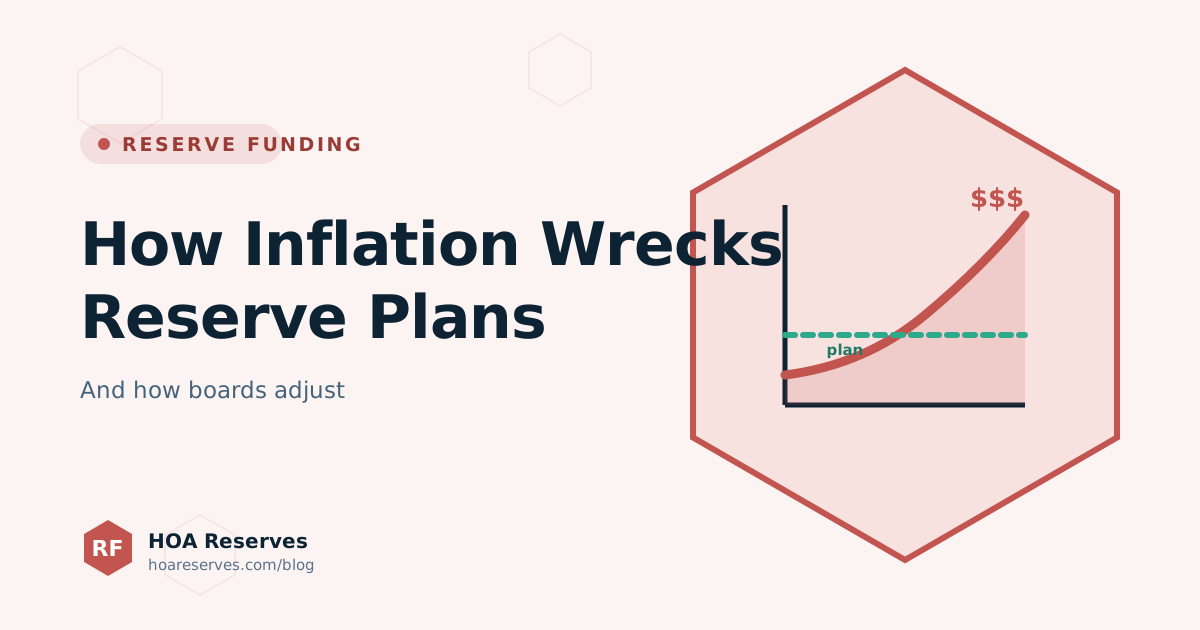
Inflation is the silent saboteur of reserve plans. A study can be perfectly accurate the day it's written and quietly underfunded a few years later, simply because the cost of everything it forecasts kept rising. Understanding how inflation works in a reserve study — and how to adjust for it — is essential to keeping a funding plan honest. Here's the mechanics.
Why Inflation Hits Reserves So Hard
Reserve studies forecast costs years or decades into the future. That long horizon is exactly what makes inflation dangerous: small annual increases compound into large gaps over time.
Consider a roof that costs $300,000 to replace today, due in 12 years. At 3% annual construction inflation, its actual replacement cost won't be $300,000 — it'll be roughly $428,000. A reserve plan that saved toward $300,000 would be nearly
And construction inflation often runs hotter than general consumer inflation — materials, skilled labor, and specialized trades have seen sharp increases in recent years. A reserve plan using an outdated or too-low inflation assumption underfunds against reality every single year.
The Two Ways Inflation Enters a Study
A reserve study handles inflation in two related places, and both matter:
1. Inflating future replacement costs. Each component's cost should be projected forward to its actual replacement year, not left at today's price. A well-built study applies an inflation rate to escalate costs over the projection period. (This is part of the contribution math.)
2. The inflation-vs-interest relationship. Reserves earn interest while they wait, which partially offsets inflation. A study models both — the inflation eroding purchasing power and the interest income building it back. The net of the two is what determines how much owners actually need to contribute. When inflation outruns interest earnings (as it often does), the gap must be made up by higher contributions.
How Inflation Quietly Underfunds Plans
The danger isn't dramatic — it's gradual and invisible until a project comes due:
- A study uses a 2.5% inflation assumption; actual construction inflation runs 5%. Every future cost is understated.
- The board funds faithfully to the study's recommendation — but the recommendation was built on the low assumption, so the fund falls behind.
- Years later, the roof bid comes in far above the study's projection, and the community faces a special assessment despite "following the plan."
This is one of the most common reasons otherwise-diligent boards end up short. The error hides inside an assumption nobody revisits.
How Boards Adjust
The fixes are straightforward but require attention:
1. Update the study regularly. This is the single most important defense. A study refreshed every 3–5 years with annual reviews recalibrates costs to current reality, catching inflation drift before it compounds too far. A decade-old study is almost certainly using stale costs.
2. Use a realistic inflation assumption. Push back if a study uses an unrealistically low inflation rate — especially for construction-heavy components. Ask the reserve specialist what rate they used and why.
3. Feed real bid data back in. When you complete a project, the actual cost tells you whether the study's assumptions held. If a roof bid comes in well above projection, other components are probably under-estimated too — a signal to update.
4. Revisit during high-inflation periods. When construction costs spike, don't wait for the scheduled update. A period of rapid inflation can gut a funding plan faster than the normal review cycle catches.
5. Build in margin. A healthy funded target (70%+) provides cushion against the inevitable imperfection of any inflation forecast.
The Connection to Dues
Inflation is also why flat dues are so dangerous. Costs rise every year; if dues and reserve contributions don't rise with them, the community loses ground in real terms continuously. Small annual dues increases that track inflation aren't a board being greedy — they're a board keeping the reserve plan from silently falling behind. (How underfunding builds.)
The Bottom Line
Inflation compounds small annual cost increases into large reserve gaps over a study's long horizon, and it underfunds plans quietly whenever the assumption is too low or the study is stale. The defenses: update the study regularly, use realistic inflation rates, feed in real bid data, revisit during cost spikes, and keep dues tracking reality. For the full funding framework, see HOA Reserve Funding.