Reserve Funding
Investing HOA Reserve Funds: Rules, Risks, and Best Practices
Reserve funds sit in an account for years, even decades, before they're spent — so it makes sense to earn a return on them. But reserve money isn't the board's to gamble with: it's the community's safety net for major repairs, and the governing principle is preservation first, return second. Here's how to invest reserves responsibly.
The Golden Rule: Safety First
Reserve funds exist to be there when a roof or elevator needs replacing. That mission dictates the investment priorities, in order:
- Safety of principal — don't risk the money
- Liquidity — have it available when components come due
- Yield — earn a return, but only after the first two are satisfied
This ordering is the opposite of aggressive investing. A board chasing high returns with reserve money — stocks, speculative instruments — is betting the community's repair fund on the market, which is a serious breach of the fiduciary duty of care. Reserve investing is about earning a modest, safe return while keeping the money secure and accessible.
Appropriate Reserve Investments
The instruments that fit the safety-first mandate:
- Insured bank accounts — money market and savings accounts at FDIC-insured banks
- Certificates of deposit (CDs) — fixed terms with predictable returns, FDIC-insured
- Treasury securities — backed by the U.S. government, very safe
- Money market funds — for liquidity, though understand whether they're insured
The common thread: principal protection. These won't make anyone rich, but they're not supposed to — they preserve the community's safety net while earning something against inflation.
The FDIC Limit Trap
Here's a detail many boards miss: FDIC insurance covers deposits only up to the standard limit (
The fix is straightforward: spread reserves across multiple insured banks (or use account structures and products designed to extend coverage) so the entire balance stays insured. For communities with large reserves, this is a basic safety step that's easy to overlook.
CD Laddering: The Classic Strategy
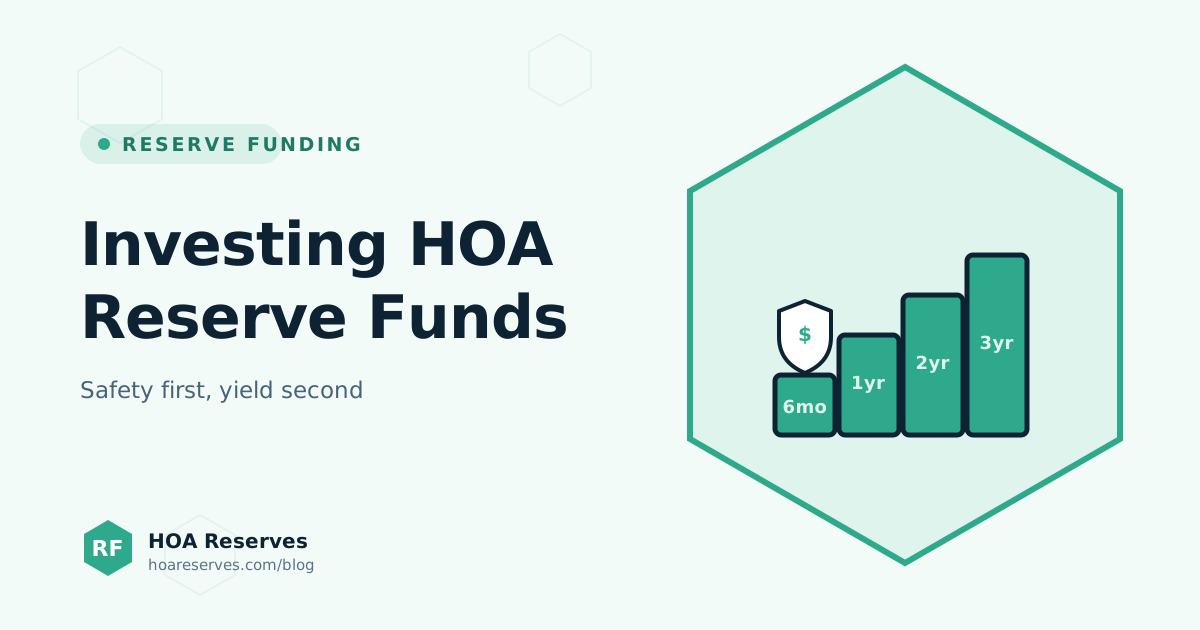
The most common reserve investment technique is a CD ladder — buying CDs with staggered maturity dates (some maturing in 6 months, some in 1 year, some in 2-3 years). Laddering balances the three priorities elegantly:
- Safety — CDs are FDIC-insured
- Liquidity — something is always maturing soon, so money is regularly available for upcoming projects
- Yield — longer CDs typically pay more than savings accounts, capturing better returns on the portion you won't need immediately
The ladder is matched to the reserve study's expense timeline: money needed soon stays liquid; money not needed for years can be locked into higher-yielding longer terms.
Interest Income and the Funding Plan
The return reserves earn isn't just a nice extra — it's an input to the funding plan. A well-built reserve study accounts for projected interest income, which reduces the contribution owners must make. Even modest yields, compounded across a 30-year projection, meaningfully lower the required contribution. Investing reserves sensibly is therefore part of keeping dues down, not a separate activity. (How contributions are calculated.)
Rules and Governance
Before investing, check the constraints:
- Governing documents may restrict how reserve funds can be invested
- State law sometimes addresses reserve investment — and often requires reserves stay in a separate account, with use restricted to reserve purposes (as in Nevada)
- An investment policy — adopting a written reserve investment policy (some states require one, as Colorado's CCIOA does for reserve practices) documents the board's safety-first approach and provides fiduciary protection
Document the policy, follow it, and keep reserve investments separate and traceable — the same discipline that prevents fraud applies.
Best Practices Summary
- Prioritize safety and liquidity over yield — always
- Stay within FDIC limits — spread large reserves across insured institutions
- Use a CD ladder matched to your expense timeline
- Account for interest income in the funding plan
- Adopt a written investment policy and follow it
- Keep reserves separate and restricted to reserve purposes
- Never chase risky returns with the community's repair fund
The Bottom Line
Reserve funds should be invested for preservation and liquidity first, modest yield second — using insured accounts, CDs (often laddered), and Treasuries, kept within FDIC limits and governed by a written policy. The goal isn't to maximize returns; it's to keep the community's safety net safe while earning enough to ease the funding burden. For the broader funding framework, see HOA Reserve Funding.