HOA Budgeting & Finance
Operating Fund vs. Reserve Fund: Why HOAs Need Both
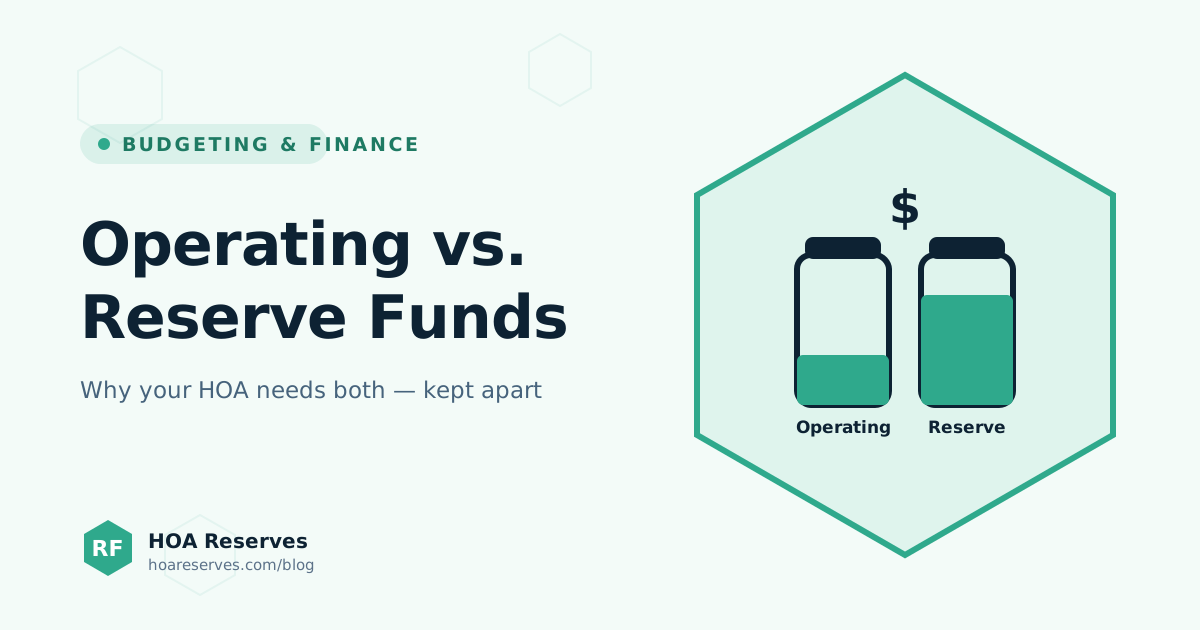
Every HOA runs on two pools of money, and confusing them is one of the most common — and most damaging — financial mistakes a board can make. The operating fund and the reserve fund do different jobs, live in different accounts, and follow different rules. Here's the clean distinction.
The Operating Fund: This Year's Money
The operating fund pays the recurring costs of running the community right now:
- Utilities, landscaping, management fees
- Insurance premiums
- Routine maintenance and minor repairs
- Administrative and professional costs
It's funded by the operating portion of monthly dues, and its balance naturally cycles up and down across the year as bills come and go. Think of it as the community's checking account: money flows in and out constantly, and a healthy balance is just enough to cover near-term obligations plus a modest cushion.
The Reserve Fund: Tomorrow's Money
The reserve fund saves for major repairs and replacements that are years away — roofs, paving, elevators, pool resurfacing, painting cycles. It's funded by the reserve portion of dues (typically 20–40%), and unlike the operating fund, it's supposed to grow steadily over time. Think of it as the community's savings account: money accumulates with purpose, and you measure its health not by the balance alone but by percent funded — how the balance compares to the wear your components have accrued.
Why They Must Stay Separate
This isn't just bookkeeping tidiness. Keeping the two funds in separate accounts matters for real reasons:
Clarity. You can't tell if reserves are adequate if reserve money is commingled with operating cash. Separation is what makes funded status measurable.
Discipline. Money that's mixed gets spent. A reserve balance sitting in the operating account looks like a surplus, and surpluses get consumed by operating temptations — a nicer landscaping contract, a deferred dues increase. Physical separation protects the future from the present.
Governance and law. Many governing documents and several state statutes require reserves to be held separately, and some restrict how reserve money can be used or moved. Lenders and auditors expect to see the separation too.
The Movement That Gets Boards in Trouble
The dangerous direction is borrowing from reserves to cover operating shortfalls. It usually starts innocently — an insurance premium spike, a tight month — and feels harmless because "we'll pay it back." Often it isn't paid back, and the community discovers a hollow reserve fund exactly when a roof fails.
Most states that address this allow temporary inter-fund borrowing only under strict conditions: formal board action, a documented repayment plan, and repayment within a set period. Even where it's legal, frequent reliance on it is a flashing financial red flag — a sign operating dues are set too low and the shortfall is being hidden in the reserve account. The clean fix is almost always a right-sized operating budget, not a standing line of credit against the community's future.
The reverse direction — moving the reserve contribution from operating into reserves each period — is exactly how it's supposed to work. That's not borrowing; that's funding.
A Simple Mental Model
Operating fund: a checking account for the community's bills, balanced to zero-ish over the year. Reserve fund: a dedicated savings account for the big repairs, growing toward a funded target, walled off from daily spending. Two accounts, two purposes, one healthy association.
For how both funds fit into the annual budget that feeds them, see The HOA Budget Guide. For building the reserve side specifically, start with HOA Reserve Funding.