Reserve Funding
Cash Flow vs. Component Funding: Two Ways to Model Reserves
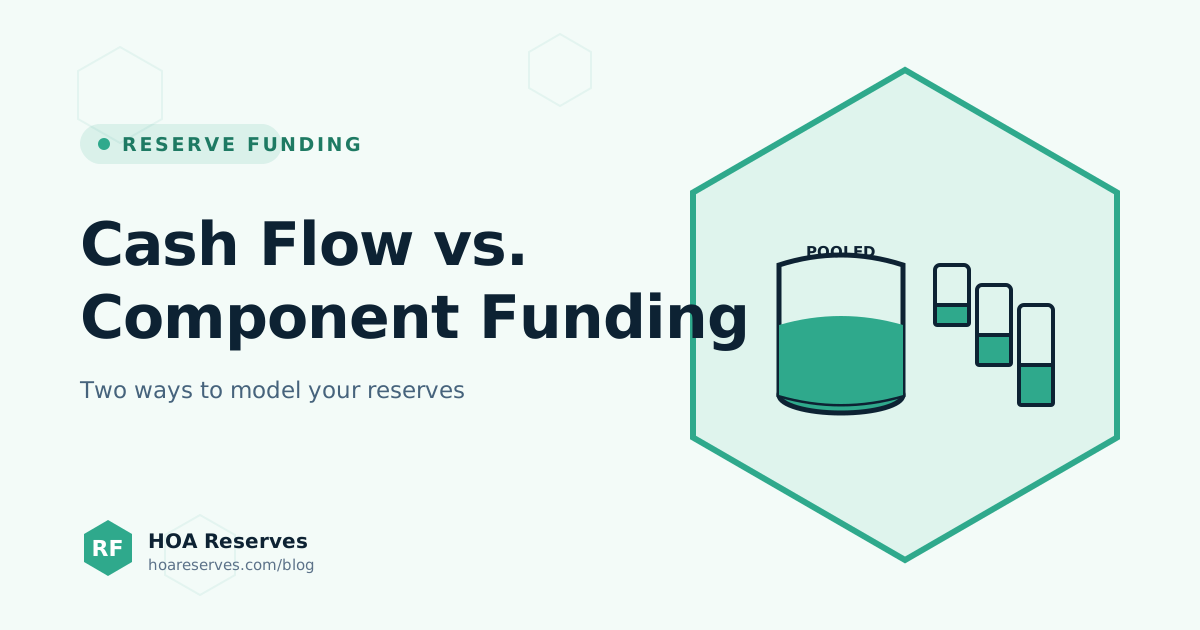
Behind every reserve funding plan is a methodology — a way of calculating how much to contribute. The two main approaches, cash flow (pooled) and component (straight-line), can produce different contribution numbers from the exact same component data. Understanding which your study uses, and why, helps you read it correctly. Here's the distinction.
The Two Methods
Component method (also called straight-line or "the segregated" method). Each component is funded in its own conceptual "bucket." You calculate the contribution needed for the roof, the paving, the pool, and so on, individually, and the total contribution is the sum. Each component accumulates toward its own replacement.
Cash flow method (also called the pooled method). All reserve contributions go into one pool, measured against the combined timeline of all future expenses. Rather than funding each component separately, the method finds the contribution that keeps the single pooled balance adequate across the whole 20–30 year projection.
Same components, same costs, same lives — but a different way of calculating the contribution.
Why Pooling Usually Wins
Most modern professional reserve studies use the cash flow (pooled) method, and for a good reason: components rarely all come due at once. In the component method, every bucket must be individually funded as if its expense could arrive in isolation. In reality, while the roof bucket is full and waiting, the paving bucket might be drawing down — and the pooled approach lets the surplus in one offset the timing of another.
The practical result: pooling typically allows a somewhat lower, smoother contribution than strict component funding, because it takes advantage of the fact that expenses are staggered across time. It uses the community's total reserve dollars more efficiently.
How This Affects Percent Funded
Here's where it connects to a number you already track. Percent funded — your reserve balance divided by the fully funded balance — is calculated the same way regardless of method, because the fully funded balance (accumulated component deterioration) doesn't change. What changes is the contribution the method recommends to keep that percent funded on a healthy trajectory.
So the method isn't about measuring health differently — it's about the funding path to get and stay there. Two studies could both target 70% funded but recommend different contribution schedules depending on method.
When the Distinction Matters to Boards
For most boards, the takeaway is simple: trust your reserve professional's method (usually pooled) and focus on the outputs — the recommended contribution and the funded trajectory. But the distinction matters in a few situations:
- Comparing studies or providers — if two studies recommend different contributions, the funding method may be part of the reason, not just different assumptions
- Understanding lender rules — the GSE reserve rules disallow baseline funding and require following the study's highest recommended level; how the study models funding affects what "highest recommended" means
- Evaluating a funding strategy — the full/threshold/baseline strategies interact with the modeling method; pooling is the common foundation, and the strategy sets the target on top of it
A Note on Baseline Funding
Don't confuse the modeling method (cash flow vs. component) with the funding goal (full, threshold, baseline). They're different layers. Cash flow modeling can be used to pursue any of the goals — but baseline funding (letting the pooled balance approach zero) is the riskiest goal and is now disallowed under GSE lending rules. The method is how you model; the goal is how much cushion you build. (The three funding strategies.)
The Bottom Line
The component method funds each component in its own bucket; the cash flow method pools contributions against the combined expense timeline, usually allowing a smoother, more efficient contribution. Most professional studies pool, percent funded is calculated the same way either way, and for most boards the right move is to trust the professional's method and focus on the contribution and trajectory it produces. For the funding strategies that sit on top of the method, see Full, Threshold, and Baseline Funding; for the contribution math, How to Calculate Reserve Fund Contributions.