HOA Budgeting & Finance
Capital Improvements vs. Repairs: Why the Difference Matters
"Is this a repair, a replacement, or an improvement?" sounds like a semantic question. For an HOA it's a financial and legal one — the answer determines which fund pays, whether owners must approve it, and how it's accounted for. Boards that blur these categories make budgeting mistakes and sometimes legal ones. Here's the clean distinction.
The Three Categories
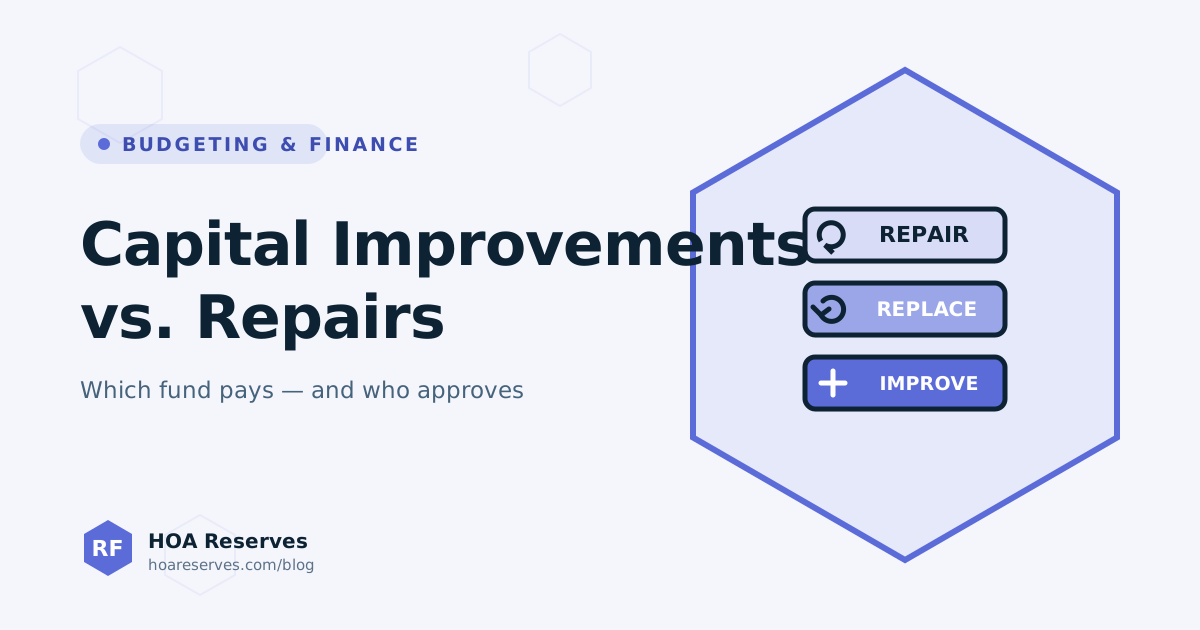
Repair — fixing something to keep it working: patching a roof leak, filling a pothole, servicing a pump. Repairs restore a component to its existing condition without extending its overall life much. These are routine and ongoing.
Replacement — swapping out a component that's reached the end of its useful life with a comparable new one: a new roof when the old one wears out, repaving a failed lot. Replacement is what reserves are built to fund — it's the predictable wear-out the reserve study forecasts.
Capital improvement — adding something new or upgrading beyond the original: a new clubhouse, adding a pool, upgrading from basic to premium materials, building an amenity that didn't exist. Improvements enhance the property rather than maintaining it.
Why the Distinction Matters
1. Which fund pays
The category usually determines the funding source:
- Repairs → the operating budget. They're routine, ongoing costs.
- Replacements → the reserve fund. This is reserves' core purpose.
- Capital improvements → often neither automatically. New additions frequently aren't in the reserve study (you don't reserve for something you don't own yet), so they're typically funded by a special assessment, a loan, or a dedicated capital budget.
Mixing these up causes real problems. Paying routine repairs out of reserves drains the fund meant for replacements. Quietly funding a new amenity from reserves robs the roof. Keeping the categories straight keeps both funds doing their jobs.
2. Whether owners must approve it
This is where the legal stakes appear. Many governing documents and state laws treat capital improvements differently from repairs and replacements — often requiring an owner vote for significant new improvements, while leaving repairs and necessary replacements to the board. A board that treats a discretionary improvement as if it were a routine replacement may skip a required vote, exposing the decision to challenge.
The logic: owners signed up to maintain what exists (replacement), but adding new obligations (improvement) changes the deal and often requires their consent. Check your CC&Rs and state law for the threshold.
3. Accounting and reserves
The categories also drive accounting. Replacements draw down reserves against the component's funded balance; improvements may need separate capital accounting; repairs flow through operating. Getting this right keeps your percent funded figure meaningful and your financial statements accurate.
The Gray Areas
Real life isn't always clean. A few common puzzles:
- Upgrade during replacement. Replacing a worn asphalt lot with concrete is part replacement (the worn-out lot) and part improvement (the upgrade). Boards often fund the replacement-equivalent cost from reserves and treat the upgrade premium separately.
- Betterment that extends life. Some work both repairs and improves — a roof restoration that extends life, for instance. Judgment and sometimes professional input are needed.
- Code-required upgrades. A replacement that must meet new code can cost more than like-for-like; that's generally still a replacement, but the premium can strain reserves calibrated to old costs (why studies need updating).
When in doubt, document the reasoning and lean on your reserve professional or counsel — the categorization affects funding source, owner approval, and accounting all at once.
Practical Guidance for Boards
- Categorize before you fund — decide repair vs. replacement vs. improvement first, because it dictates the source
- Route repairs to operating, replacements to reserves — protect each fund's purpose
- Check approval requirements for improvements — many need an owner vote; don't skip it
- Keep improvements out of the reserve study unless and until the association owns them
- Document gray-area decisions — the reasoning is your protection if questioned
The Bottom Line
Repair, replace, improve — three words, three funding sources, and sometimes three different approval paths. Boards that keep them straight budget accurately, protect their reserves, and stay on the right side of owner-approval rules. For how replacements flow through the reserve plan specifically, see HOA Reserve Funding; for the overall budget, The HOA Budget Guide.