Reserve Studies
Master Association vs. Sub-Association Reserves
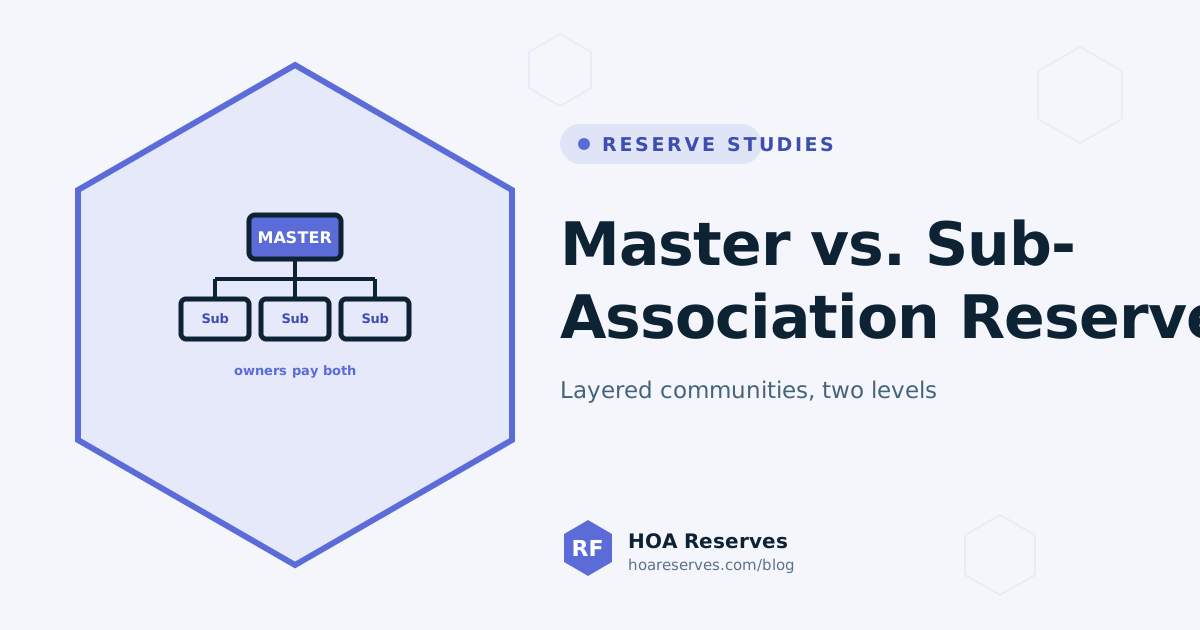
Large planned communities are often organized in layers: a master association overseeing community-wide infrastructure, with sub-associations (or neighborhood associations) handling individual neighborhoods or condo buildings within it. Each level has its own reserve obligations — and owners typically pay into both. Understanding how reserves divide across the layers is essential for these communities. Here's how it works.
The Layered Structure
In a master-planned community with this structure:
- The master association typically maintains community-wide elements — main roads, the main entry and gates, community-wide amenities (a large clubhouse, central pool, trails), shared infrastructure, and common landscaping
- Sub-associations typically maintain their own neighborhood's elements — the buildings (in a condo sub-association), local roads, neighborhood amenities, and landscaping within their area
- Owners belong to both — they're members of their sub-association and the master, and pay assessments to each
Each association is a separate entity with its own budget, board, and reserves. This means a community-wide reserve study doesn't exist as a single document — instead, the master and each sub-association have their own studies covering their own components. (Component inventory basics.)
Why Owners Pay Into Both
A point that confuses many owners: in a layered community, you pay assessments to both your sub-association and the master, because each maintains different things you benefit from. Your sub-association assessment funds your neighborhood's components and reserves; your master assessment funds the community-wide components and reserves. Both have reserve components that will need replacing, so both need reserve funding. An owner's total reserve "burden" is split across the two levels.
This also means an owner assessing a community's reserve health must look at both levels — a healthy sub-association sitting under an underfunded master (or vice versa) still exposes the owner to assessment risk from the weak level. (Reserve health and value.)
The Responsibility-Division Challenge
The central challenge in layered communities is cleanly dividing responsibility between master and sub-associations:
- Clear division — well-drafted governing documents specify exactly which components each level maintains, so each can reserve appropriately
- Ambiguity risks gaps — if it's unclear whether the master or a sub-association maintains something, that component can fall through the cracks, with neither reserving for it (echoing the townhome ambiguity problem at a larger scale)
- Coordination matters — the levels should coordinate so nothing is double-counted or missed
Each association should know precisely its own components and reserve for them, with the overall structure ensuring everything is covered once. Governing documents (often a master declaration plus sub-association declarations) define the division; where they're unclear, clarification with counsel prevents reserve gaps.
Planning at Each Level
The master association should:
- Conduct its own reserve study for community-wide components (roads, main amenities, shared infrastructure, gates)
- Fund reserves for those large, often expensive community-wide items
- Recognize it serves many owners across all sub-associations
Each sub-association should:
- Conduct its own reserve study for its neighborhood/building components
- Fund reserves for those — which, for a condo sub-association, include the building and structural components
- Coordinate with the master to avoid gaps and overlaps
Both levels follow the same reserve principles — study, fund, percent funded, avoid special assessments — applied to their respective components.
What Owners and Buyers Should Check
For owners and buyers in layered communities, reserve due diligence means checking both levels:
- The sub-association's reserve health (its study, percent funded, any assessments)
- The master association's reserve health (same)
- Whether responsibility is clearly divided (gaps create future surprises)
- The total assessment burden across both levels
A weak reserve picture at either level is a risk. (Questions to ask before buying.)
The Bottom Line
In layered master-planned communities, the master association and sub-associations each maintain different components, each has its own reserve study and funding, and owners pay into both. The key challenges are cleanly dividing responsibility (so nothing falls through the cracks) and recognizing that reserve health must be assessed at both levels. Each association should study and fund its own components while coordinating so everything is covered once. Owners and buyers should check both levels, because a weak one at either exposes them to assessment risk. For the study basics, see What Is a Reserve Study?.